
ALLURE: A Multi-Modal Guided Environment for Helping Children Learn to Solve a Rubik’s Cube with Automatic Solving and Interactive Explanations
Published in Proceedings of the AAAI Conference on Artificial Intelligence, 2022
ALLURE bridges automated cube solving and child-friendly teaching by pairing subgoal-conditioned planning with interactive, natural-language explanations.
Why it matters
- AI systems like DeepCubeA can solve the Rubik's Cube but do not explain their strategies in human-understandable terms.
- Educational settings need step-by-step reasoning, not only final solved states.
- Children benefit from interactive, visual, and guided learning interfaces for complex problem-solving tasks.
- There is a gap between automated planning/search systems and explainable, collaborative AI built for learning.
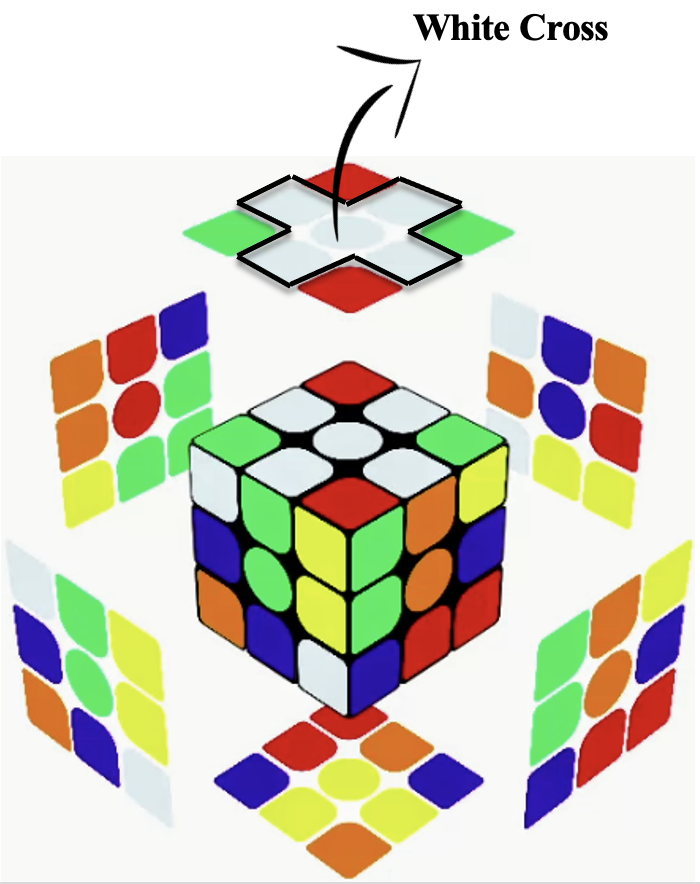
The system first focuses on forming the white cross (Figure 2), a standard early subgoal.
What we did
- Introduced ALLURE, a multi-modal collaborative AI system for learning to solve the Rubik's Cube.
- Extended DeepCubeA with hindsight experience replay so it can achieve arbitrary subgoals (for example, forming the white cross).
- Used inductive logic programming (Popper ILP) to extract human-understandable algorithms from solution traces.
- Translated logic-based rules into natural-language instructional explanations.
- Built a 3D interactive cube visualization and a Rasa-based chatbot for guided, explainable learning.
- Enabled collaborative use where learners can propose their own subgoals or example algorithms for refinement.
How it works
- Goal-conditioned learning: a DeepCubeA variant trained with hindsight experience replay achieves arbitrary cube subgoals.
- Example extraction: solution traces between subgoals are collected as state-action examples.
- Inductive logic programming: Popper ILP induces concise first-order logic programs that describe the move algorithms.
- Natural-language translation: induced logic rules are rendered as explanation templates for learners.
- Multi-modal interface: 3D cube visualization plus chatbot interaction (text, animation, and voice) supports guided learning.
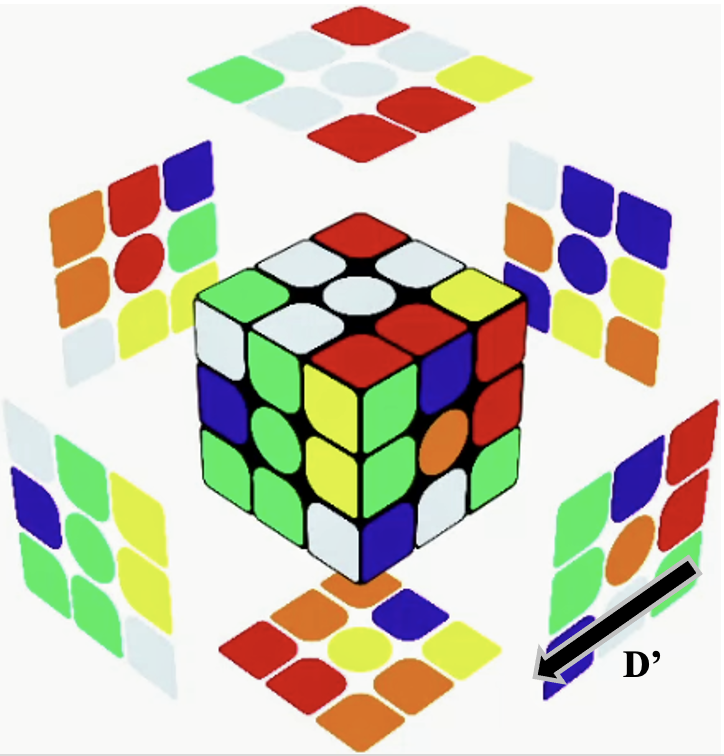
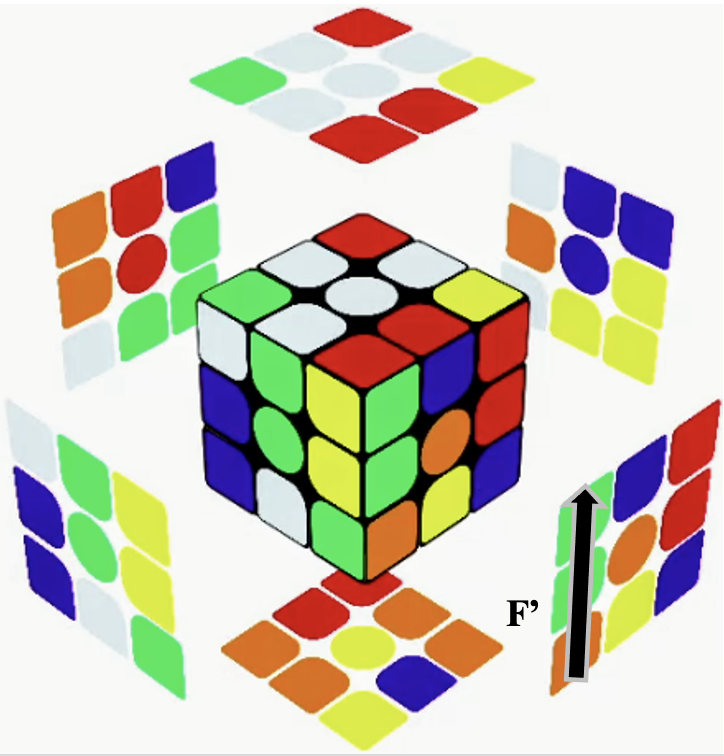
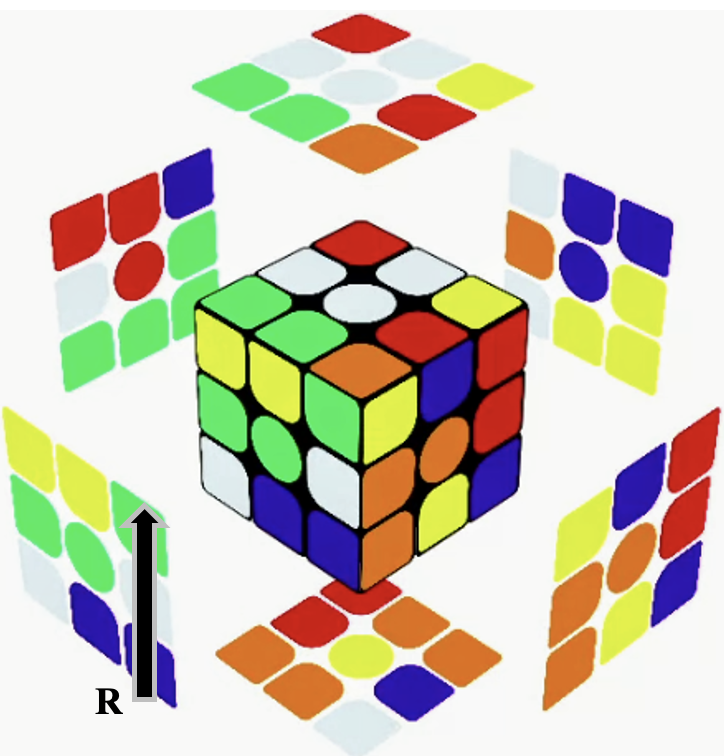
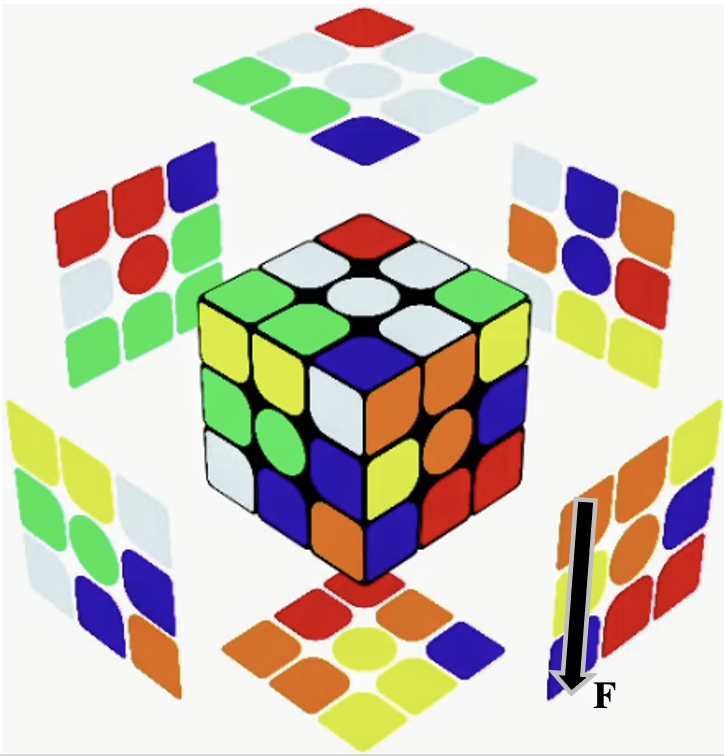
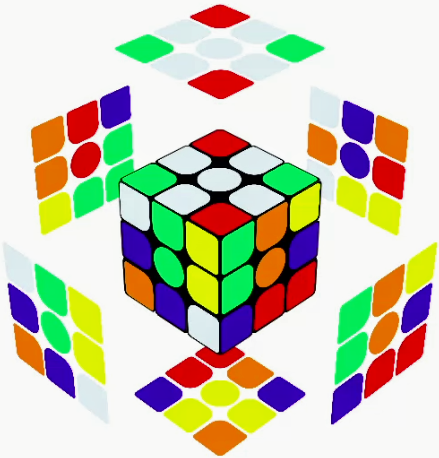
Figure 1 shows how the system explains each move while progressing toward the white cross.
Key contributions
- Introduces a system that both learns to solve the Rubik's Cube and explains its strategies.
- Integrates deep reinforcement learning with ILP to extract human-readable algorithms.
- Enables collaborative interaction where users can propose subgoals or example algorithms.
- Provides a multi-modal explainable AI interface combining 3D visualization and NLP-driven dialogue.
Recommended citation: Kausik Lakkaraju, Thahimum Hassan, Vedant Khandelwal, Prathamjeet Singh, Cassidy Bradley, Ronak Shah, Forest Agostinelli, Biplav Srivastava, and Dezhi Wu. (2022). "ALLURE: A Multi-Modal Guided Environment for Helping Children Learn to Solve a Rubik's Cube with Automatic Solving and Interactive Explanations." Proceedings of the AAAI Conference on Artificial Intelligence, vol. 36, no. 11, pp. 13185-13187.
Download Paper